
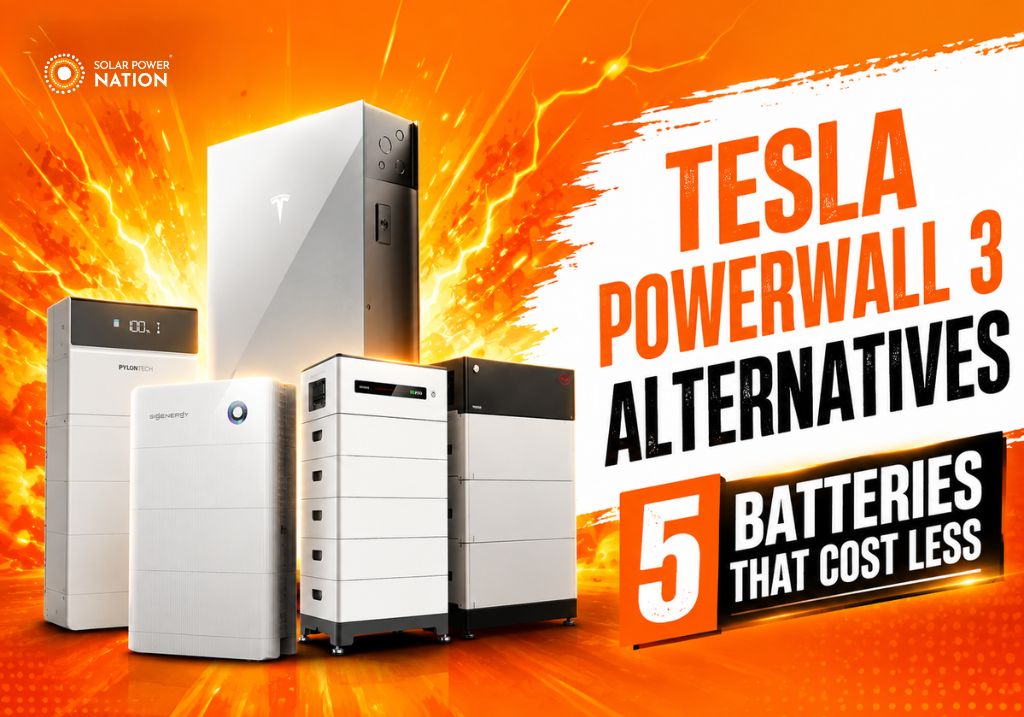
Tesla’s Powerwall 3 gets searched more than almost any other home battery in Australia, and it’s easy to see why — strong brand recognition, a polished app, and a genuinely capable all-in-one unit with a built-in inverter. It’s a good battery. It’s also not the only good battery, and for a lot of households it’s not the most cost-effective one for the storage they actually need.
If Powerwall 3 is on your shortlist, these are the alternatives worth putting next to it before you sign anything.
What You’re Actually Paying For With a Powerwall
Some of the Powerwall’s price reflects genuinely useful engineering: an integrated hybrid inverter, tight software integration, and Tesla’s brand-backed warranty and support network. Some of it reflects brand premium, the same way it does with any well-known consumer electronics company. Neither of those is a criticism — it’s just worth separating out what you’re actually paying for, because a lot of that premium doesn’t translate into meaningfully better day-to-day bill savings or blackout backup.
1. Sigenergy SigenStor
Sigenergy has moved quickly to become one of the more talked-about premium-tier alternatives, with an all-in-one design philosophy similar to Powerwall — integrated inverter, unified app, clean install footprint. It’s generally positioned as a genuine premium competitor rather than a straight budget alternative, so the value case here is closer specs at a sharper price rather than a downgrade.
2. BYD Battery-Box Premium
BYD brings the advantage of a long Australian track record and genuine modular expandability — you can generally add capacity later without replacing the whole system. It typically pairs with a separate hybrid inverter rather than being fully integrated, which means slightly more install complexity but often more flexibility on inverter choice, particularly for retrofits.
3. Pylontech Force
Pylontech’s higher-voltage Force range targets the same higher-capacity households a Powerwall buyer is often looking at, backed by one of the longest field track records of any battery brand sold in Australia. It’s a sensible pick for buyers who want proven reliability at a more accessible price point than the premium tier.
4. GoodWe Lynx
GoodWe built its reputation on inverters before extending into batteries, and the Lynx range benefits from that — particularly for households already running (or planning to run) a GoodWe inverter, where the ecosystem integration is a genuine advantage rather than just a sales pitch.
5. Neovolt
Neovolt represents the sharper end of the price spectrum among properly engineered LFP batteries with local backing. It won’t have the brand recognition of Tesla, but for households whose priority is minimising cost-per-kWh of usable storage without dropping into unbranded territory, it’s a serious option to compare.
How to Actually Compare These Fairly
Spec sheets alone won’t tell you which battery is right for your home. The comparison that matters looks at:
- Usable capacity relative to your evening and overnight usage — not just the headline kWh figure
- Whether the inverter is integrated or separate, and what that means for your specific install (new system vs retrofit)
- Warranty term and what it actually covers — product defects, performance/throughput guarantees, or both
- Local support and installer familiarity — a battery is only as good as the team who installs and services it
- Total installed price, not just the battery unit cost, since inverter and installation costs vary between integrated and separate-inverter systems
Is Powerwall 3 Ever the Right Call?
Sometimes, yes. If you specifically want the tightest possible software integration, the brand recognition matters to you (for example, if you’re planning to sell the home and want a name buyers instantly recognise), or you’re already deep into another Tesla product ecosystem, those are legitimate reasons to pay the premium. The point of this comparison isn’t “never buy a Powerwall” — it’s that plenty of households assume it’s the only serious option, when it’s really one strong option among several.
Frequently Asked Questions
Is there a battery as good as Tesla Powerwall for less money?
Several brands — including Sigenergy, BYD, Pylontech and GoodWe — offer comparable real-world performance for many households at a lower total installed cost. “As good” depends on which specific features matter most to you: integrated design, modular expansion, or raw price-per-kWh.
Why is Tesla Powerwall more expensive than other batteries?
A combination of brand premium, tightly integrated hardware and software, and Tesla’s broader support and warranty infrastructure. Some of that premium reflects genuine engineering value; some reflects brand recognition, similar to other well-known consumer electronics companies.
What’s the cheapest reliable alternative to Tesla Powerwall?
Among properly engineered, LFP-based batteries with genuine local support, Neovolt and Pylontech’s value-tier options are generally the most competitive on price-per-kWh.
Can I switch from considering a Powerwall to a different battery without losing my quote?
Yes — a good solar retailer should be able to reprice your system with a different battery brand without starting the whole quoting process over, as long as the underlying system design (inverter, panel layout) doesn’t need to change significantly.
Compare Before You Commit
Don’t decide based on brand name alone. Solar Power Nation can size and quote Tesla Powerwall 3 alongside these alternatives for your specific home, so you’re comparing real numbers, not just marketing.


